The Bathroom Blog
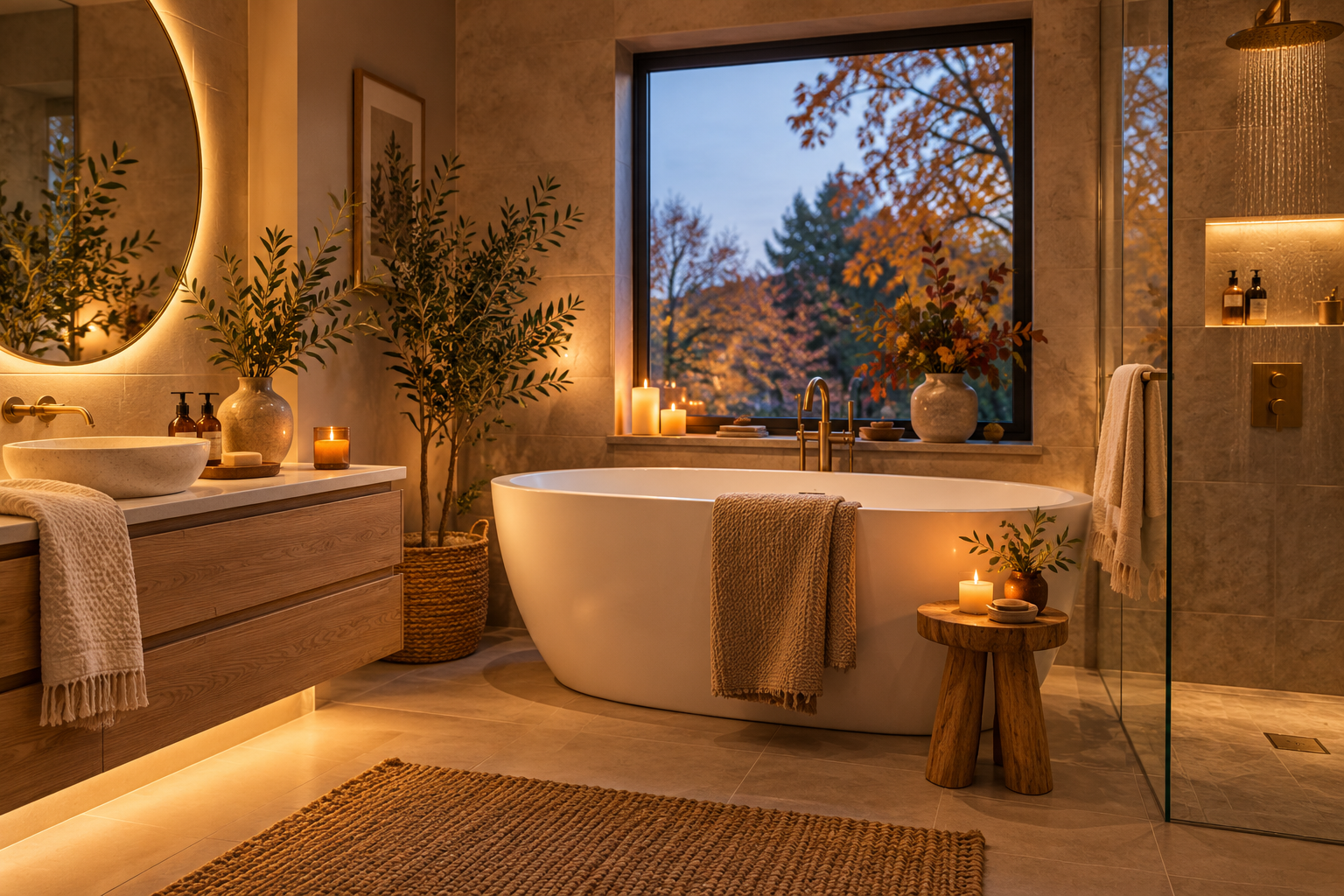
The Art of a Cosy Bathroom
Transform your bathroom into a warm and inviting retreat. Discover how beautiful colours, natural textures, layered lighting and thoughtful finishing touches can create a cosy bathroom that’s as comfortable as it is stylish.
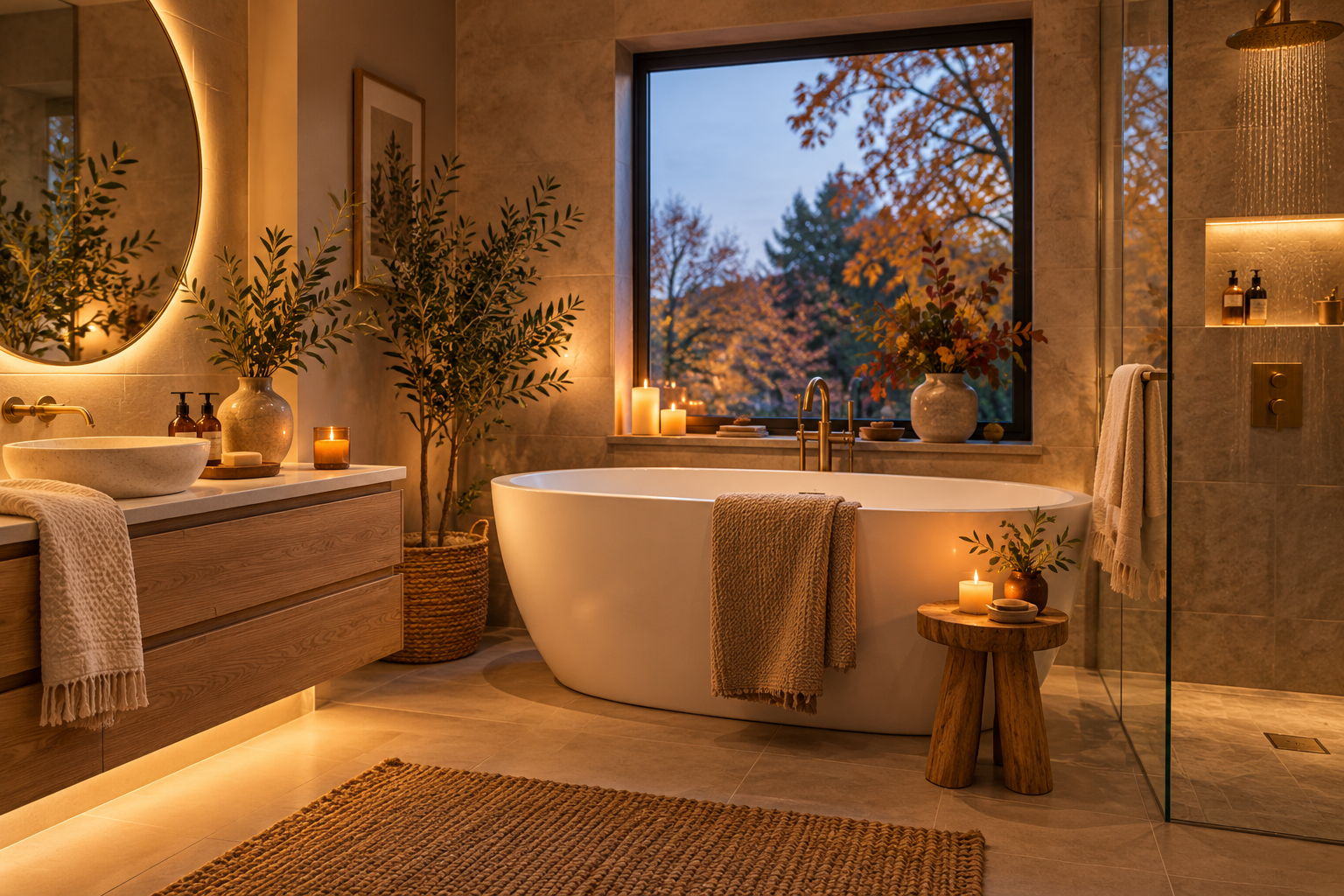
Discover how thoughtful design, inviting colours and carefully chosen finishing touches can transform your bathroom into a warm, welcoming retreat.
When the days grow shorter and the temperature begins to drop, there’s something particularly appealing about coming home to a warm, inviting bathroom. Whether it’s a long soak after a busy day or a refreshing shower on a chilly morning, the bathroom can become one of the most comforting spaces in the home.
Yet creating that sense of warmth isn’t simply about turning up the heating. The colours we choose, the materials we introduce, the way we light a room and even the smallest decorative details all contribute to how a bathroom looks and feels.
Modern bathroom design has increasingly embraced softer, more natural interiors. Rather than the stark whites, cool greys and highly polished surfaces that dominated for years, many homeowners are discovering the appeal of warmer palettes, tactile finishes and spaces that feel both contemporary and comfortable.
The good news is that you don’t need an enormous bathroom or an extravagant budget to achieve this.
With a little thoughtful planning, even a relatively compact bathroom can become a beautifully relaxing retreat.
1. Embrace Warmer, More Natural Colours
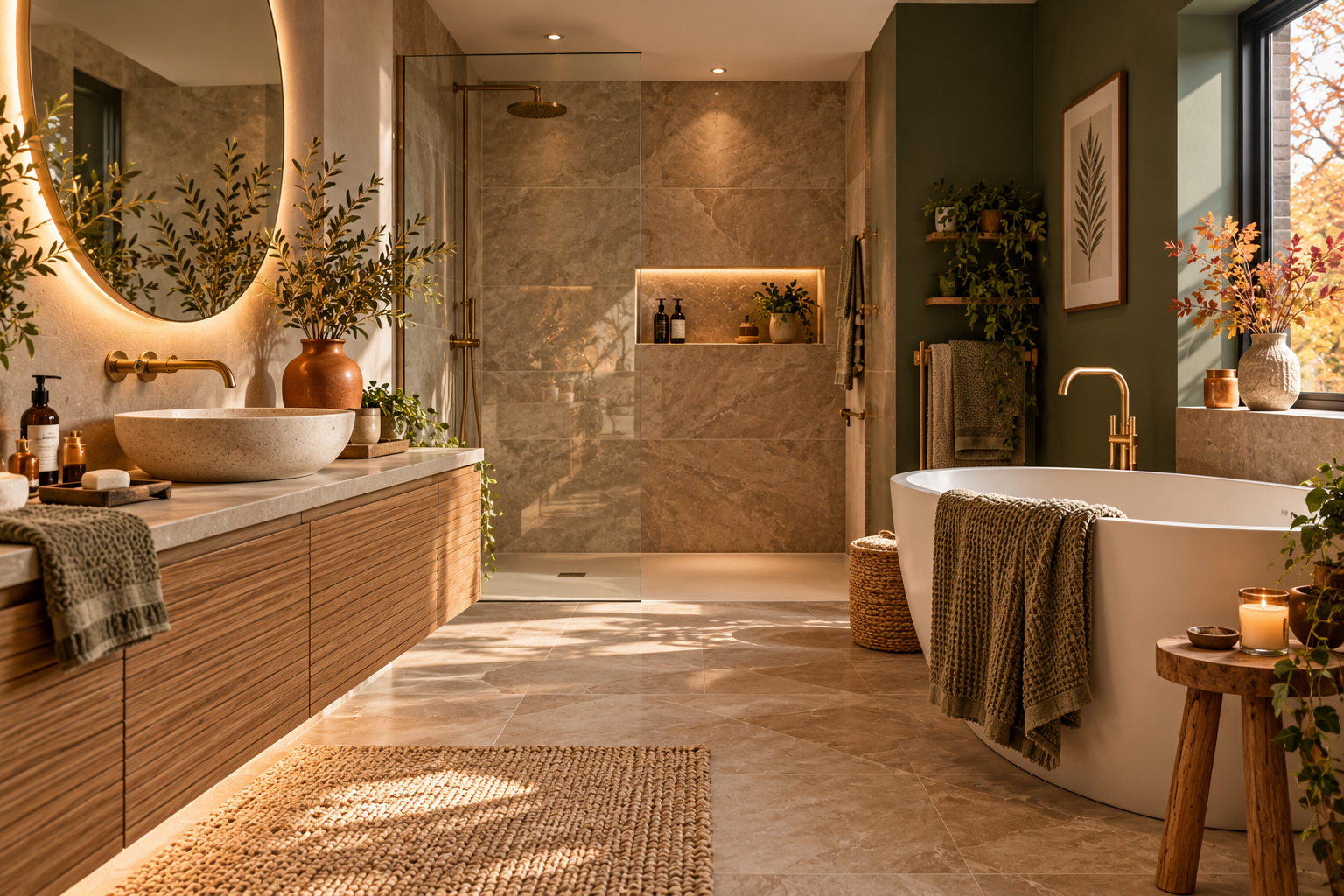
Colour is one of the most powerful tools in bathroom design, and it can dramatically influence the atmosphere of a room.
While white will always have its place, particularly in smaller bathrooms, introducing warmer tones can help soften the overall appearance and create a more welcoming environment.
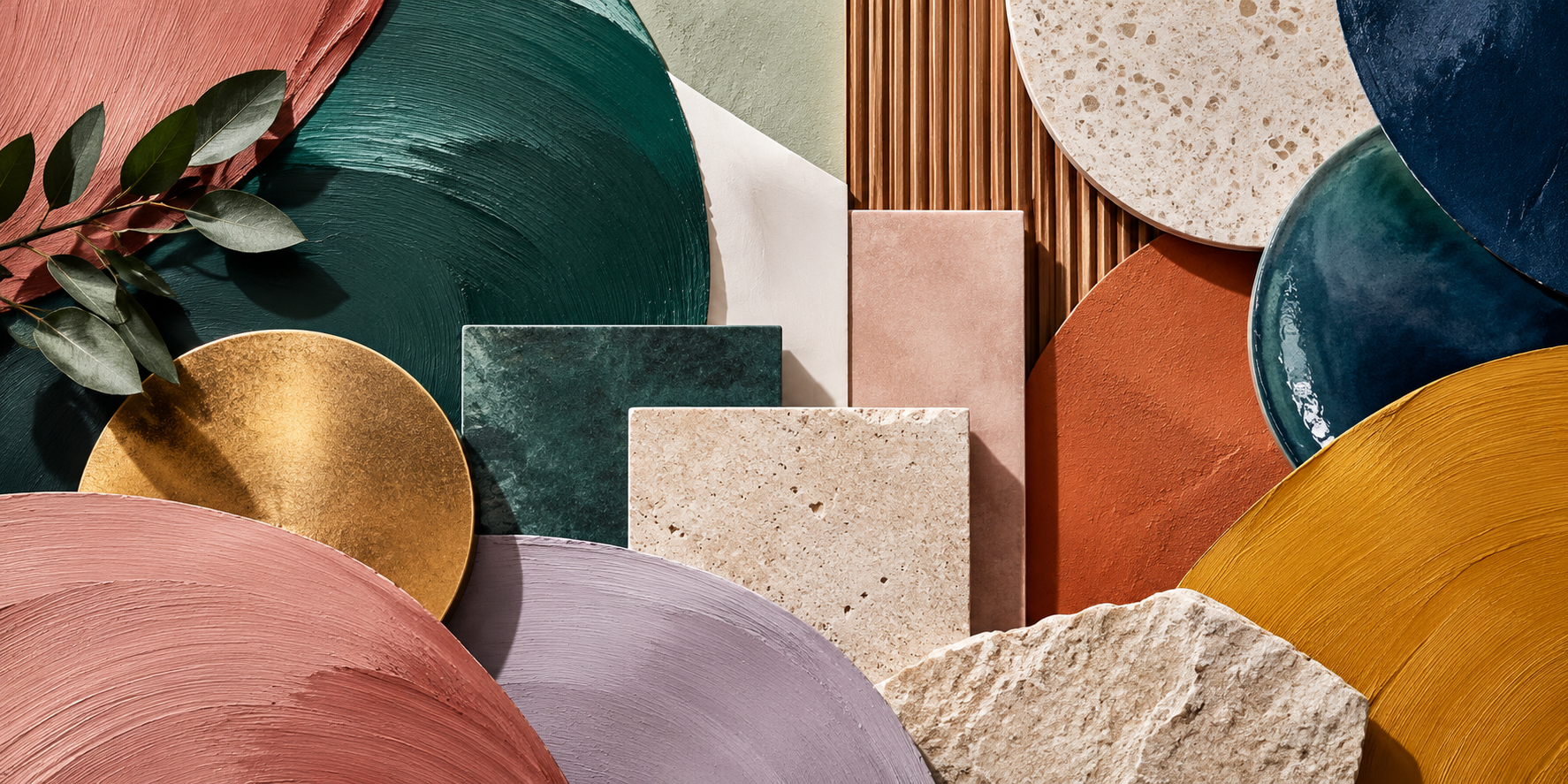
Earthy shades such as warm beige, soft taupe, muted terracotta and gentle olive green work particularly well in bathrooms. These colours take inspiration from the natural world, helping create a sense of calm without making the room feel dark or enclosed.
For a timeless look, consider combining warm neutral wall tiles with natural wood furniture. A pale limestone-effect tile, for example, can provide an elegant backdrop for an oak vanity unit, while brushed brass or bronze fittings introduce another layer of warmth.
If you’re feeling a little more adventurous, deeper colours can work beautifully too.
Forest green, rich burgundy and warm charcoal can create a wonderfully atmospheric bathroom, particularly when balanced with lighter surfaces and carefully considered lighting.
The key is finding the right balance.
A bathroom doesn’t need to be entirely neutral to feel relaxing, but neither does every surface need to make a statement.
Sometimes, one beautifully chosen colour is enough to transform the whole room.
2. Introduce Natural Materials and Beautiful Textures
One of the simplest ways to make a bathroom feel more inviting is to introduce a variety of textures.
Bathrooms naturally contain plenty of hard surfaces. Porcelain, ceramic, glass and metal are practical, durable and easy to maintain, but without softer elements, they can sometimes leave a room feeling a little clinical.
Natural materials provide a wonderful counterbalance.
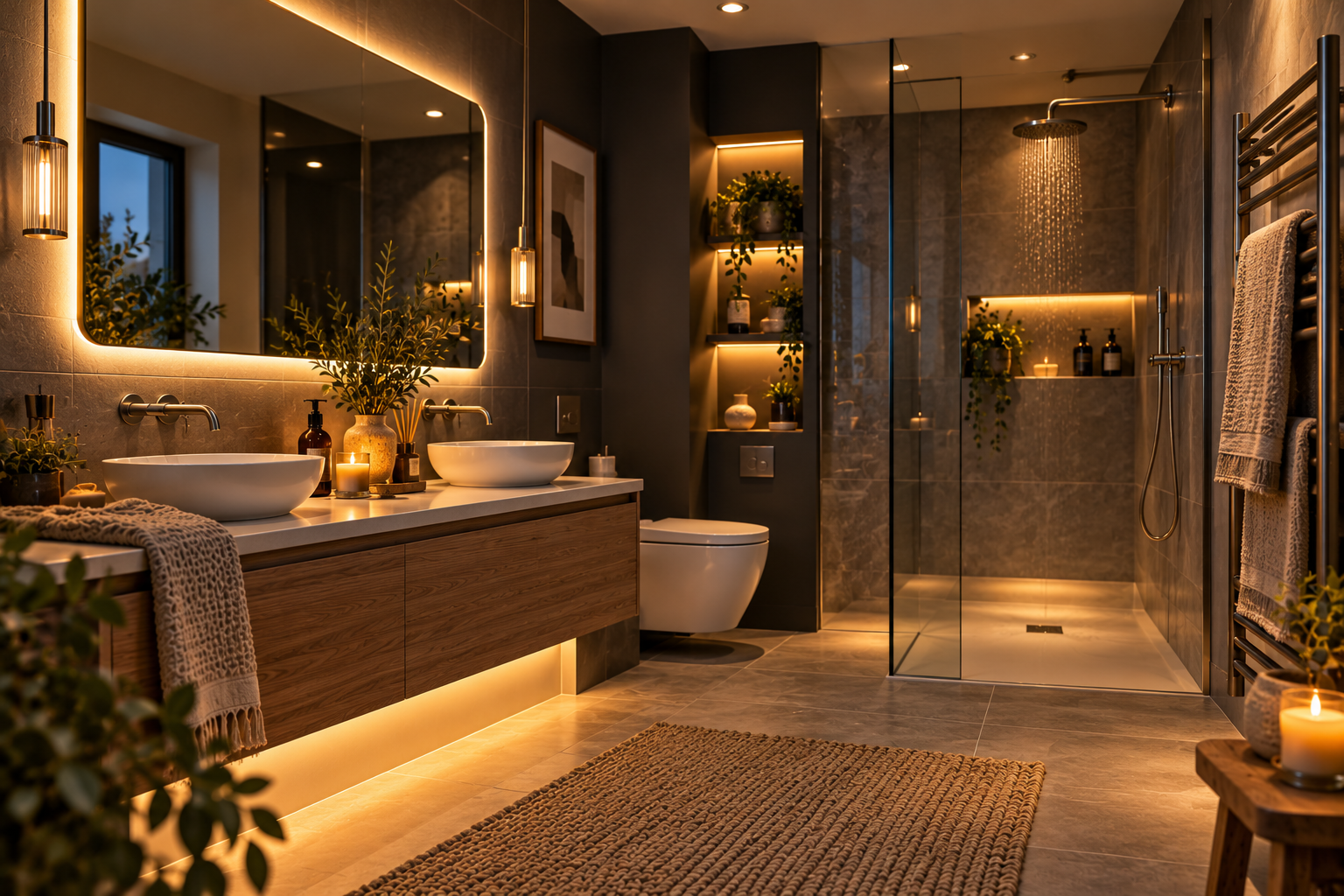
Wood-effect bathroom furniture, stone-inspired tiles and textured wall finishes can all introduce visual warmth while retaining the practicality required in a busy bathroom.
Modern porcelain tiles are particularly versatile, offering convincing interpretations of natural stone, limestone, marble and even timber, without many of the maintenance considerations associated with the original materials.
For example, large-format stone-effect tiles can create a seamless, calming backdrop, while a fluted wooden vanity or subtly textured basin introduces additional character.
It’s also worth thinking about contrast.
Pairing smooth surfaces with more tactile finishes creates visual interest without making the room feel cluttered.
A beautifully polished basin might sit against a softly textured wall tile, while brushed metal taps provide a gentle contrast to natural wood furniture.
And don’t underestimate the finishing touches.
Plush towels, woven baskets, a simple wooden stool or a carefully positioned plant can make a surprising difference.
These smaller details help soften the room and introduce the comfortable, lived-in character that makes a bathroom feel like part of the home rather than simply a functional space.
3. Create the Right Atmosphere with Layered Lighting
Lighting is often one of the most overlooked aspects of bathroom planning, yet it can make an extraordinary difference to how a room feels.
A bathroom needs to perform several different functions throughout the day.
Bright, practical lighting is essential when shaving, applying makeup or getting ready for work. But that same level of brightness isn’t necessarily what you want when enjoying a relaxing bath in the evening.
This is where layered lighting becomes particularly valuable.
Rather than relying on a single ceiling light, consider combining several different sources of illumination.
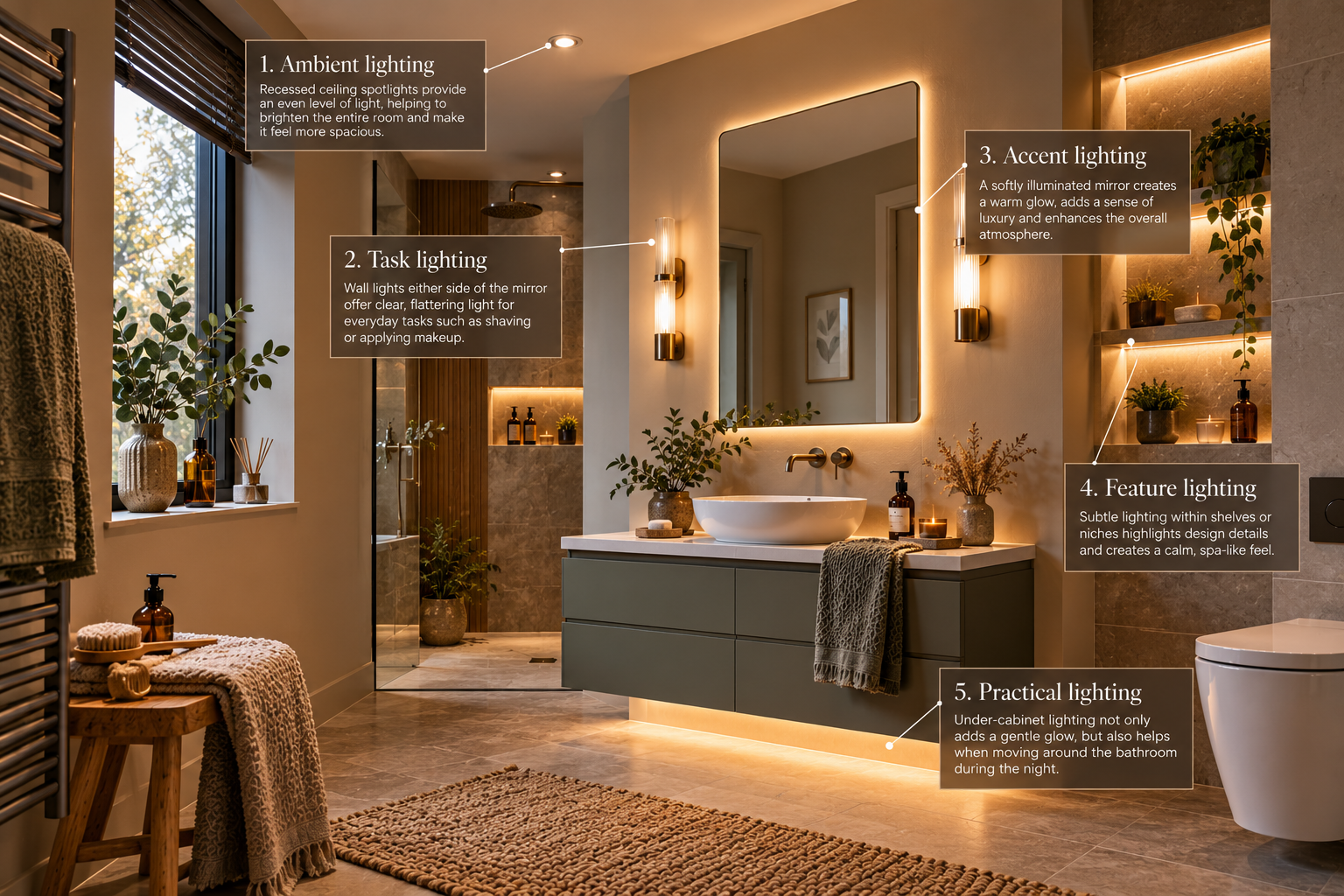
Ambient lighting provides the general brightness needed to move comfortably around the room.
Task lighting, such as illuminated mirrors or carefully positioned wall lights, helps with everyday activities.
Accent lighting introduces atmosphere, highlighting architectural details or creating a softer glow around baths, furniture and recessed shelving.
Integrated LED lighting beneath a floating vanity can be especially effective, creating a subtle wash of light across the floor.
Similarly, illuminated mirrors can provide practical lighting while becoming an attractive design feature in their own right.
For a particularly relaxing atmosphere, warm-white lighting can help soften the appearance of tiles and furniture, creating a gentler, more welcoming environment.
Dimmable lighting is another worthwhile consideration, allowing you to adjust the mood according to the time of day.
Of course, bathroom lighting must always be suitable for its location, particularly around baths and showers, so it’s important to involve a qualified electrician when planning the installation.
Get the lighting right, however, and even a relatively simple bathroom can feel wonderfully sophisticated.
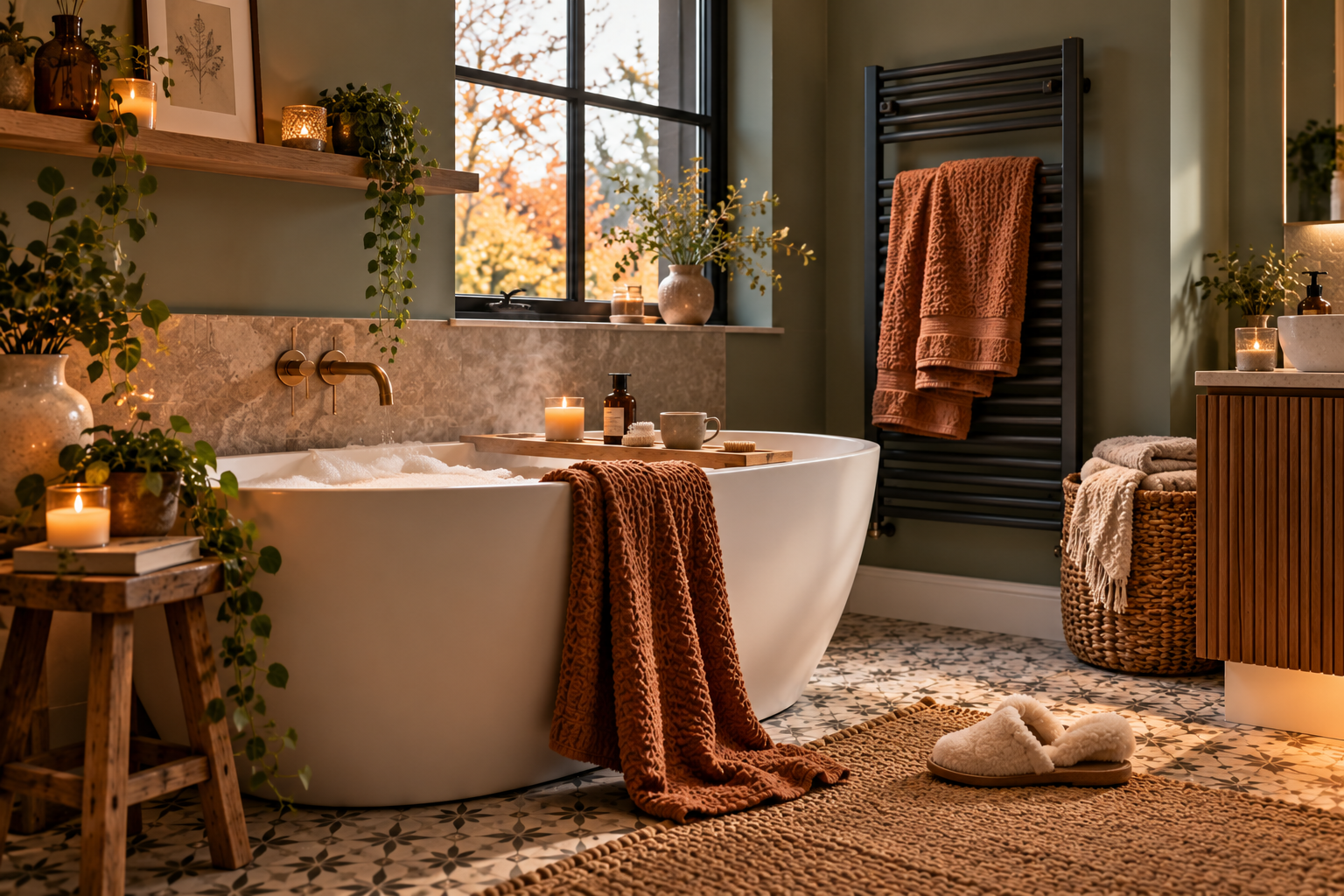
4. Make Comfort Part of the Design
A cosy bathroom should feel as comfortable as it looks.
And while colour, texture and lighting all contribute to the atmosphere, practical considerations such as heating, storage and layout are equally important.
After all, even the most beautiful bathroom loses some of its appeal when you’re stepping onto freezing tiles on a winter morning.
Underfloor heating is an increasingly popular option for bathroom renovations, providing comfortable warmth underfoot while freeing up valuable wall space.
It’s particularly effective beneath tiled floors, although the suitability of any system depends on the floor construction, available space and overall heating requirements.
Heated towel rails are another welcome addition.
Beyond their practical purpose, modern towel rails are available in a wide variety of finishes and designs, allowing them to complement the wider bathroom scheme.
From traditional chrome to contemporary brushed brass and matt black, they can become an attractive feature rather than simply a functional necessity.
Comfort also extends to how easily the room works.
A generously proportioned shower, a bath that’s genuinely comfortable to use and storage that keeps everyday essentials within reach can all make a bathroom more enjoyable.
In smaller spaces, thoughtful planning becomes especially important.
Wall-hung furniture can create a greater sense of openness, while recessed shower niches and mirrored cabinets provide useful storage without overwhelming the room.
The objective isn’t simply to create something that looks beautiful in a photograph.
It’s to design a bathroom that feels wonderful to use, every single day.
5. Add the Finishing Touches That Make It Yours
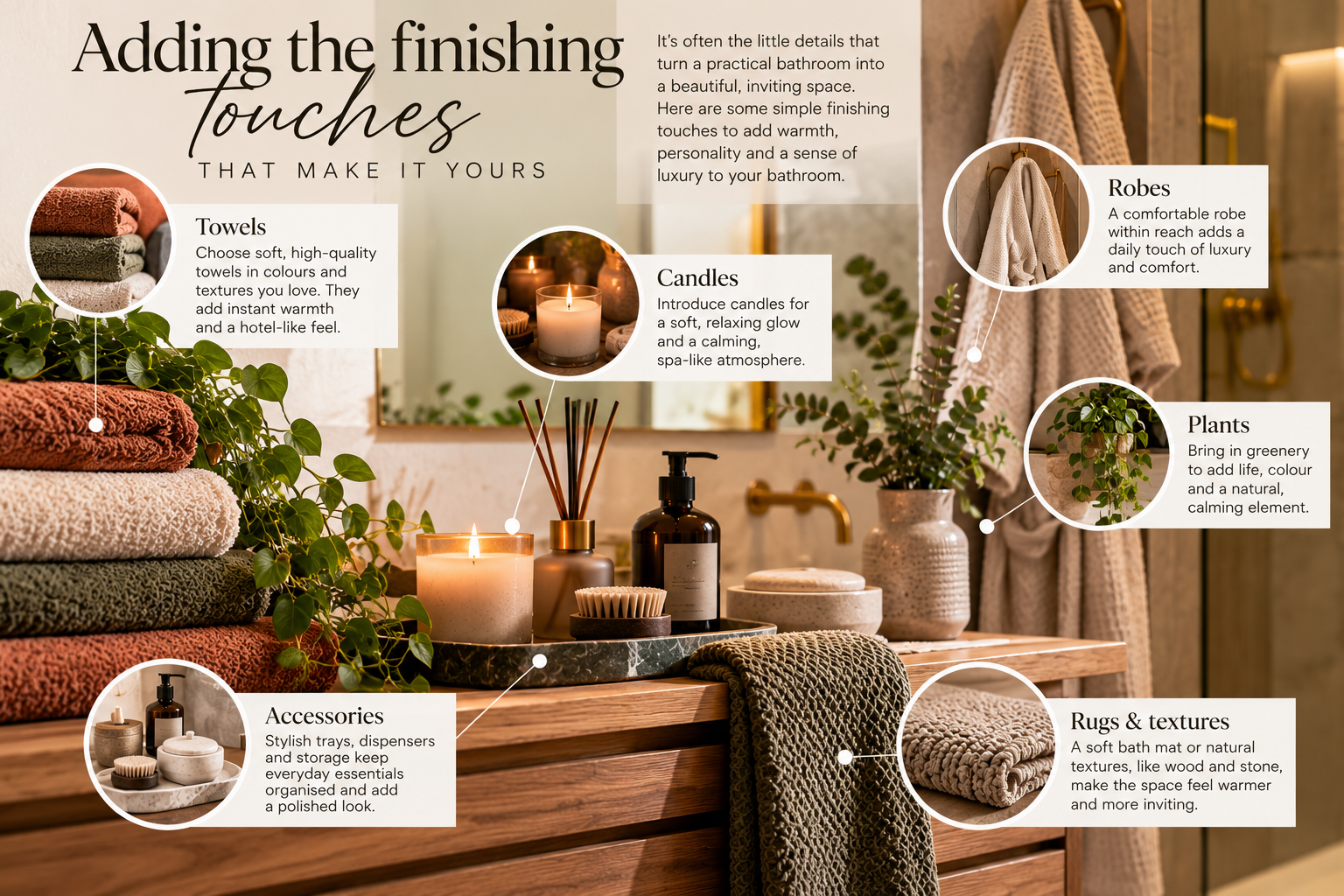
Once the main elements of your bathroom are in place, it’s often the smaller details that bring everything together.
Soft furnishings are an easy place to start.
Thick cotton towels in warm neutral colours, a comfortable bath mat and perhaps a textured robe can introduce softness while complementing the wider design.
Accessories offer another opportunity to add personality.
A ceramic soap dispenser, a simple decorative tray or a carefully chosen piece of artwork can help create a more considered appearance without cluttering the room.
Plants can also work beautifully in bathrooms, bringing a little greenery into the space and reinforcing the connection with nature.
The important thing is to choose varieties suited to the room’s available light and humidity.
For bathrooms with limited natural daylight, even a small arrangement of dried botanicals can introduce a softer, more organic touch.
And while decorative accessories can be changed whenever you fancy a refresh, it’s worth investing a little more thought in the permanent fixtures and fittings.
Choosing timeless tiles, well-made furniture and quality brassware provides a strong foundation that can evolve with your tastes.
That way, your bathroom can feel fresh and contemporary today without becoming dated a few years down the line.
Creating Your Perfect Bathroom Retreat
A warm, welcoming bathroom doesn’t have to be extravagant.
Often, the most successful designs are those that bring together a handful of carefully considered elements: a harmonious colour palette, beautiful natural textures, flattering lighting and practical features that make everyday life more comfortable.
Whether you’re planning a complete renovation or simply exploring ideas for the future, thinking about how you want your bathroom to feel is just as important as deciding how you want it to look.
At Cranleigh Bathroom Studios, we believe beautiful bathroom design should combine style, comfort and practicality, whatever your space or budget.
Want To Find Out More?
Pop into our showroom to see the latest in design, colours and trends. If you’re after advice on any aspect of your design, we’re here to help. Call us today or pop in and see us in Cranleigh. 01483 272727.
Featured Blogs